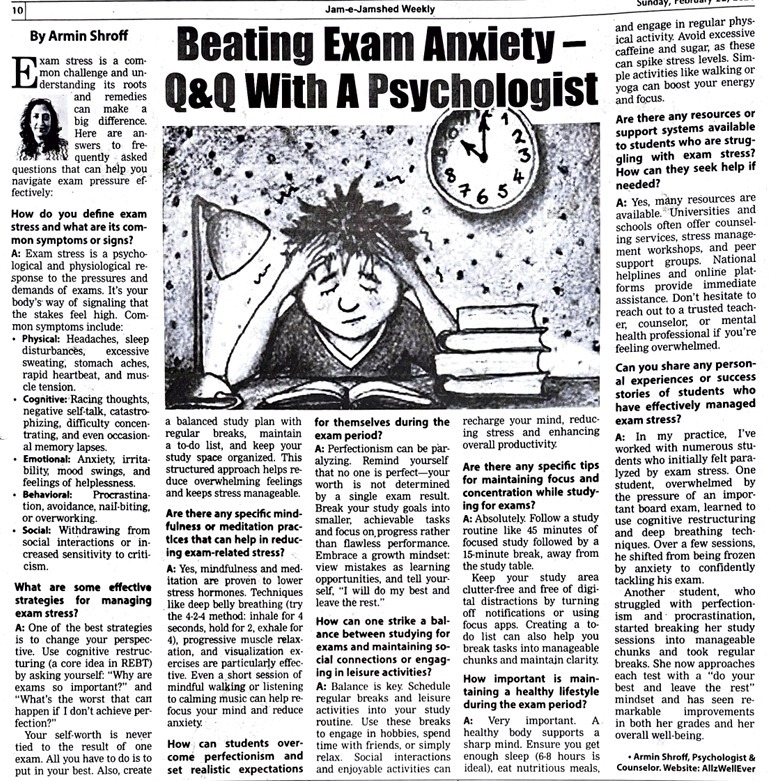
Examinations can be stressful, but understanding what is happening in our minds and bodies can make a difference. Exam stress is often a response to the pressure we place on ourselves, the expectations we experience and the importance we attach to the outcome.
In my work with students, I believe it is important to look beyond marks and performance. Helping students understand their thoughts, recognise their emotions and develop practical coping strategies can help them approach examinations more confidently.
Exam stress may show up in different ways. Some students experience headaches, disturbed sleep or difficulty concentrating. Others struggle with racing thoughts, irritability, self-doubt, procrastination or the fear of disappointing their families. Recognising these signs is an important first step.
One useful approach is to examine the thoughts that increase anxiety. A student may think, “If I don't score well, my future is ruined,” or “I must get everything right.” Such thoughts can make an already challenging situation feel overwhelming. Learning to question these assumptions and develop more helpful, realistic thinking can reduce unnecessary pressure.
Practical preparation also matters. Instead of looking at the entire syllabus as one huge task, students can divide it into smaller, manageable sections. A realistic timetable, regular revision, short breaks and adequate sleep can help make preparation more structured and less stressful.
When anxiety rises, simple relaxation techniques can help. Mindful breathing, progressive muscle relaxation and a short walk can provide an opportunity to pause and regain focus. Students should also make time for activities they enjoy, maintain social connections and avoid comparing their preparation constantly with that of others.
Perfectionism deserves special attention. Wanting to do well can be motivating, but believing that anything less than perfect is failure can create unnecessary distress. Students can learn to set achievable goals, notice their progress and recognise that their worth is not determined by examination results alone.
Parents and teachers also have an important role. Encouragement, patient listening and realistic expectations can help students feel supported rather than judged. Instead of asking only about marks, adults can ask how the student is coping and what kind of support would be useful.
Finally, students should remember that seeking help is a sign of self-awareness, not weakness. If anxiety becomes persistent, interferes significantly with sleep or daily functioning, or feels difficult to manage alone, speaking with a trusted adult, counsellor or qualified mental health professional can be helpful.
Examinations are an important part of academic life, but they are not the whole of life. With thoughtful preparation, helpful thinking, healthy routines and the right support, students can learn to face examination periods with greater confidence and emotional resilience.